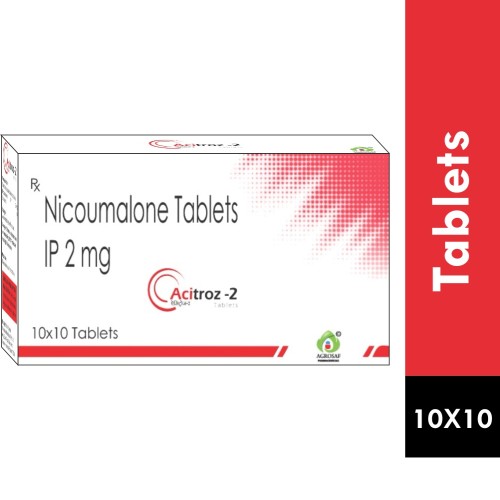
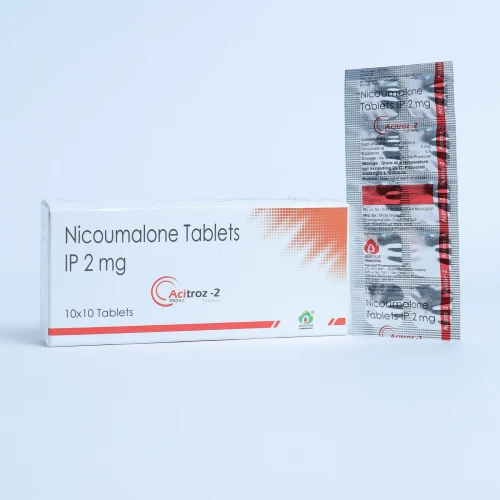
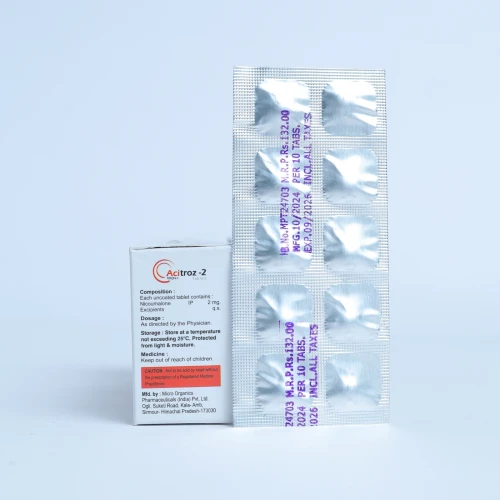
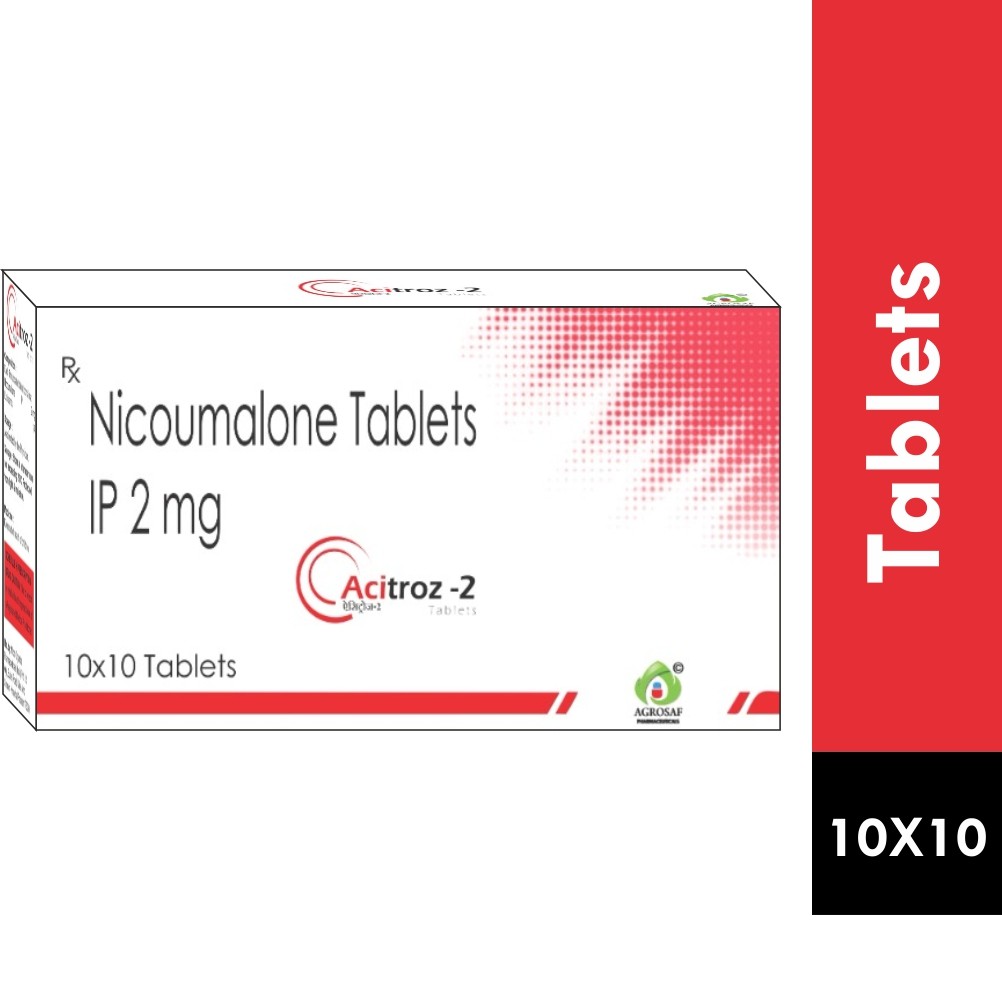
| PACKAGING TYPE: | 10x10 Strip (10 Strips In 1 Box) |
| COMPOSITION: | Nicoumalone (2mg) |
| FORMULATION: | Tablet |
| Description: | ACITROZ-2 Tablet contains Nicoumalone 2mg (also known as Acenocoumarol), an oral anticoagulant used to prevent and treat blood clots. It works by inhibiting vitamin K-dependent clotting factors, thereby reducing the blood’s ability to clot and preventing thromboembolic events. Nicoumalone is widely prescribed for conditions such as deep vein thrombosis (DVT), pulmonary embolism, atrial fibrillation, and for patients with prosthetic heart valves to reduce the risk of stroke and clot formation. Regular monitoring of INR (International Normalized Ratio) is essential to ensure safe and effective therapy. |
| Side Effects: | Common side effects may include: Easy bruising Bleeding gums Nosebleeds Rare but serious side effects: Severe bleeding (internal or external) Blood in urine or stools Severe headache or dizziness Allergic reactions Note: Seek immediate medical attention in case of unusual bleeding. |
| How to Use: | Take ACITROZ-2 Tablet strictly as prescribed by a healthcare professional Usually taken once daily at the same time each day Swallow with water; can be taken with or without food Regular INR monitoring is required to adjust dosage Do not skip doses or double doses |
| Precaution: | Regular INR monitoring is mandatory Avoid activities that increase risk of injury or bleeding Inform your doctor about all medications, especially antibiotics or NSAIDs Maintain consistent dietary intake of vitamin K Avoid alcohol or use cautiously Not recommended during pregnancy |
| Product Benefits: | Prevents formation of harmful blood clots Reduces risk of stroke and embolism Useful in DVT, pulmonary embolism, and atrial fibrillation Essential for patients with prosthetic heart valves Supports long-term anticoagulation therapy Well-established a |
Frequently Asked Questions
You May Like
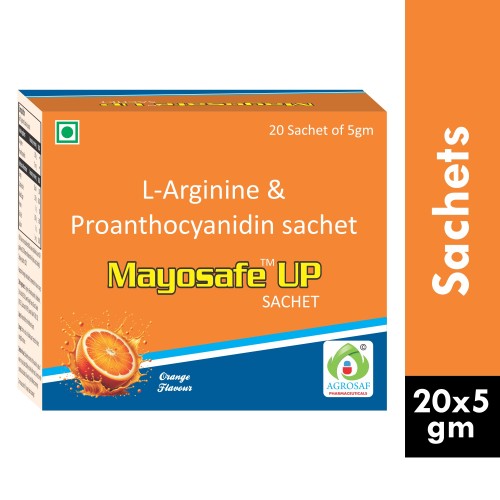
MAYOSAFE UP SACHETS
INGREDIENTS:-(ENERGY 21.00 KCAL,CARBOHYDRATE 1.80GM,ADDED SUGER 0.00GM,PROTEIN 3.00GM,TOTAL FAT 0.20GM,TRANS FAT 90.00MG)L-ARGNINE(3.00GM) & VACCINIUM OXYCOCCOS (PROANTHOCYANIDIN 75.00MG) GRANULES SACHET
₹ 1060/-
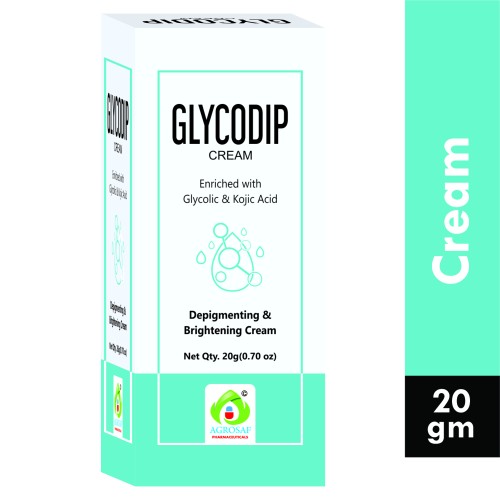
GLYCODIP CREAM
AQUA,Glycolic Acid,CETO STEARYL ALCOHOL,ALPHA ARBUTIN,PROPYLENE GLYCOL,NIACINAMIDE,PROPANEDIOL,DICAPRYLYL CARBONATE,EMULSIFYING WAX,KOJIC ACID DIPALMITATE,CETOMACROGOL 1000,ISOPROPYL MYRISTATE,GLYCERYL STEARATE(AND) PEG-100 STEARATE,GLYCERYL MONOSTEARATE,BETAINE,PHENOXYETHANOL & ETHYL HEXYL GLYCERINE, SODIUM LACTATE,SODIUM GLUCONATE,XYLITYLGLUCOSIDE(AND) ANHYDROXYLITOL (AND) XYLITOL,SODIUM HYDROXIDE,PERFUME,DISODIUM EDTA.
₹ 369.35/-
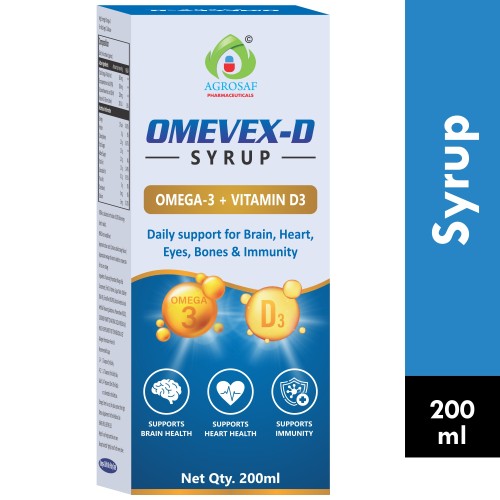
OMEVEX D SYRUP
Total Omega-3 Fatty Acid 610 mg, Eicosapentaenoic Acid (EPA) 260 mg, Docosahexaenoic acid (DHA) 200 mg, Vitamin D3 (From Lichen) 200 I.U
₹ 800/-
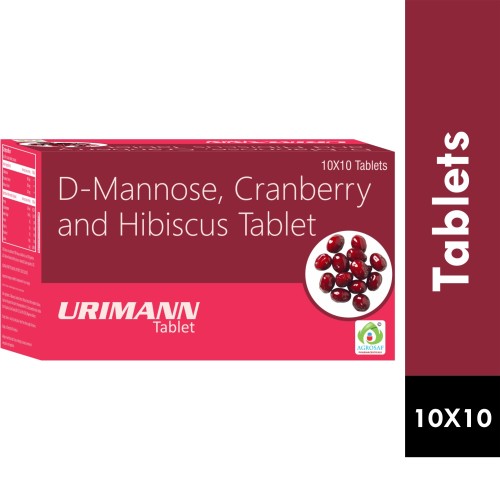
URIMANN TABLETS
Each film coated tablet contains Active Ingredients including D-Mannose 600 mg ( %RDA), Cranberry Extract 300 mg ( %RDA), and Hibiscus Extract 100 mg ( %RDA). Nutritional Information (Approx) per serving: Energy 2.4 kcal (0.12% %RDA), Carbohydrates 0.60 g (0.2% %RDA), Added Sugar 0 g (0% %RDA), Protein 0 g (0% %RDA), Total Fat 0 g (0% %RDA), Cholestrol 0 mg (0% %RDA), and Sodium 1 mg (0.05% %RDA)
₹ 4540/-
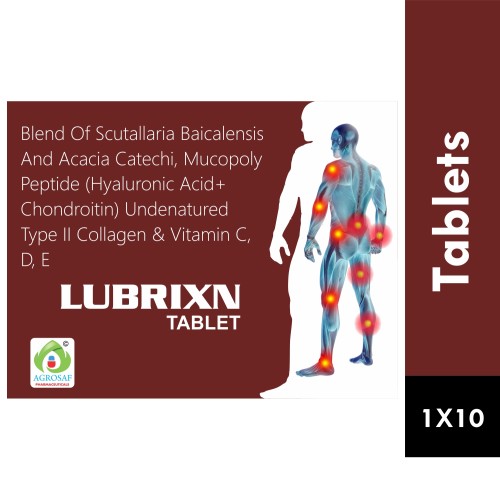
LUBRIXN TABLET
Each coated tablet contains (Approx): Blend of Scutallaria baicalensis and Acacia catechu 500 mg, Hyaluronic Acid 30 mg, Chondroitin 100 mg, Undenatured Type II Collagen 200 mg, Vitamin C 35 mg, Vitamin E 60 mg and Vitamin D3 400 I.U.
₹ 290/-
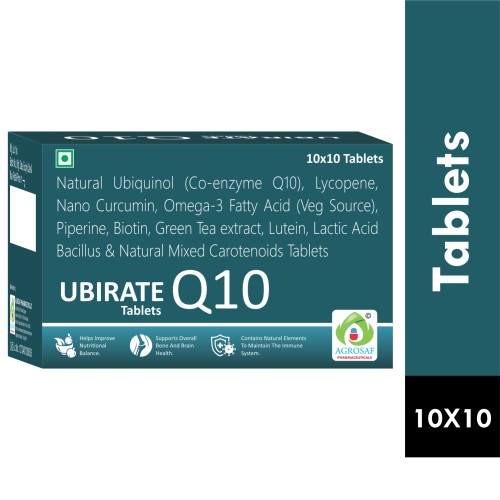
UBIRATE Q10 TABLETS
Each film coated tablet contains: Natural Ubiquinol (Co-enzyme Q10) 50mg, Lycopene 6% 5000mcg, Nano Curcumin 10% 500 mg, Omega 3 Fatty Acids Eicosapentaenoic Acid (EPA) 20% (veg source) 45 mg, Docosahexaenoic Acid (DHA) 10% (veg source) 30 mg, Piperine 5% 5 mg, Biotin 30 mcg, Wheat Germ Oil 25 mg, Lutein 8% 250 mcg, Green Tea Extract 10 mg, Natural Mixed Carotenoids 10 mg, Lactic Acid Bacillus 60 million spores, Vitamin A (Oily form as palmitate) 1600 IU, Vitamin B1 1 mg, Vitamin B2 1 mg, Vitamin B6 0.5 mg, Vitamin B12 0.5 mcg, Vitamin D3 100 IU, Calcium Pantothenate 1 mg, Folic acid 50 mcg, Ferrous Sulphate Eq. to Iron 5 mg, Magnesium Sulphate 1 mg, Zinc Sulphate monohydrate 0.5 mg, Potassium Sulphate 1 mg, Selenium di oxide 70 mcg, Chromium Picolinate 25 mcg, Elemental Boron (as Sodium Borate) 1.5 mcg, Elemental Silicon (as Colloidal Silicon Dioxide IP) 200 mcg, Elemental Nickel (as Nickel sulphate) 5 mcg, Elemental Tin (as stannous chloride dehydrate) 10 mcg, Elemental Vanadium (as Sodium metavanadate) 10 mcg, Colour: Red Oxide Of Iron
₹ 5690/-
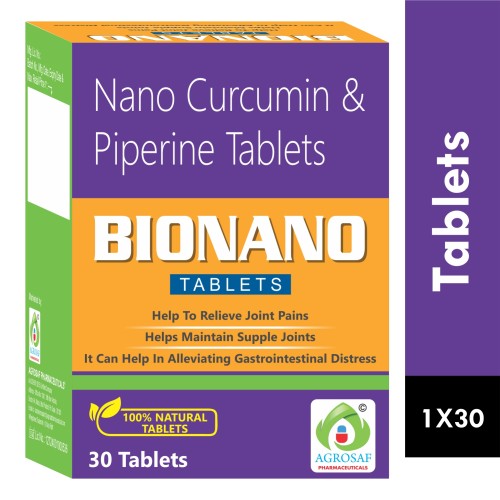
BIONANO TABLETS
Each Film Coated Tablet contains (approx.) Energy Value 0.40 Kcal, Carbohydrates 0.10 gm, Protein 0.00 gm and Fat 0.00 gm. Nano Curcumin 25% 500.00 mg and Piperine 5% 5.00 mg
₹ 1820/-
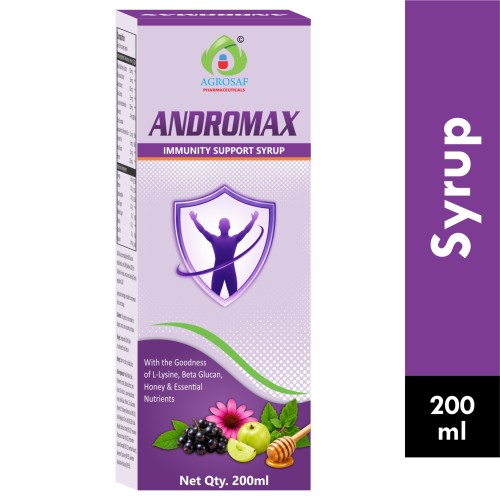
ANDROMAX SYRUP
Each 5 ml contains approx. Black Elderberry Extract 100 mg, Echinacea Extract 60 mg, Amla Extract 100 mg, Tulsi Extract 25 mg, L-Lysine Hydrochloride 250 mg, Vitamin C 40 mg, Zinc Gluconate equivalent to Elemental Zinc 2.5 mg, Vitamin D3 5 mcg, Beta Glucan 25 mg and Honey 250 mg. Nutritional Information: Energy 5 kcal, Protein 0.1 g, Carbohydrate 1.8 g, Total Sugar 0.2 g, Added Sugar 0 g, Total Fat 0 g, Sodium 8 mg and Cholesterol 0 mg
₹ 240/-
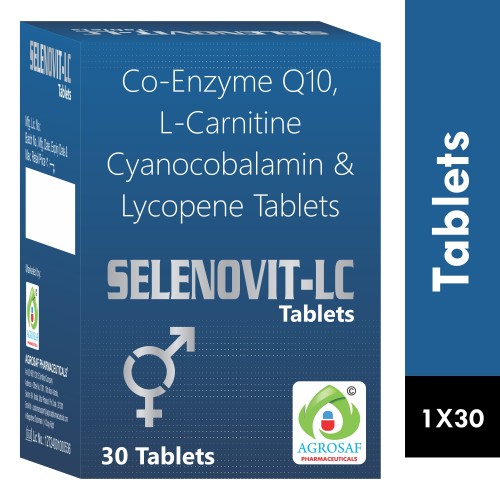
SELENOVIT-LC TABLETS
Nutritional Information: Approx. values per serving/tablet — Energy Value 0.40 Kcal, Carbohydrates 0.10 gm, Fat 0.000 gm and Protein 0.000 gm. Each film coated tablet contains (Approx.) Co-Enzyme Q10 (50%) 100 mg, L-Carnitine 500 mg, Cyanocobalamin 2.2 mcg, Lycopene 10% 5000 mcg and Excipients Q.S.
₹ 2180/-
MAYOSAFE UP SACHETS
INGREDIENTS:-(ENERGY 21.00 KCAL,CARBOHYDRATE 1.80GM,ADDED SUGER 0.00GM,PROTEIN 3.00GM,TOTAL FAT 0.20GM,TRANS FAT 90.00MG)L-ARGNINE(3.00GM) & VACCINIUM OXYCOCCOS (PROANTHOCYANIDIN 75.00MG) GRANULES SACHET
₹ 1060/-
GLYCODIP CREAM
AQUA,Glycolic Acid,CETO STEARYL ALCOHOL,ALPHA ARBUTIN,PROPYLENE GLYCOL,NIACINAMIDE,PROPANEDIOL,DICAPRYLYL CARBONATE,EMULSIFYING WAX,KOJIC ACID DIPALMITATE,CETOMACROGOL 1000,ISOPROPYL MYRISTATE,GLYCERYL STEARATE(AND) PEG-100 STEARATE,GLYCERYL MONOSTEARATE,BETAINE,PHENOXYETHANOL & ETHYL HEXYL GLYCERINE, SODIUM LACTATE,SODIUM GLUCONATE,XYLITYLGLUCOSIDE(AND) ANHYDROXYLITOL (AND) XYLITOL,SODIUM HYDROXIDE,PERFUME,DISODIUM EDTA.
₹ 369.35/-
OMEVEX D SYRUP
Total Omega-3 Fatty Acid 610 mg, Eicosapentaenoic Acid (EPA) 260 mg, Docosahexaenoic acid (DHA) 200 mg, Vitamin D3 (From Lichen) 200 I.U
₹ 800/-
URIMANN TABLETS
Each film coated tablet contains Active Ingredients including D-Mannose 600 mg ( %RDA), Cranberry Extract 300 mg ( %RDA), and Hibiscus Extract 100 mg ( %RDA). Nutritional Information (Approx) per serving: Energy 2.4 kcal (0.12% %RDA), Carbohydrates 0.60 g (0.2% %RDA), Added Sugar 0 g (0% %RDA), Protein 0 g (0% %RDA), Total Fat 0 g (0% %RDA), Cholestrol 0 mg (0% %RDA), and Sodium 1 mg (0.05% %RDA)
₹ 4540/-
LUBRIXN TABLET
Each coated tablet contains (Approx): Blend of Scutallaria baicalensis and Acacia catechu 500 mg, Hyaluronic Acid 30 mg, Chondroitin 100 mg, Undenatured Type II Collagen 200 mg, Vitamin C 35 mg, Vitamin E 60 mg and Vitamin D3 400 I.U.
₹ 290/-
UBIRATE Q10 TABLETS
Each film coated tablet contains: Natural Ubiquinol (Co-enzyme Q10) 50mg, Lycopene 6% 5000mcg, Nano Curcumin 10% 500 mg, Omega 3 Fatty Acids Eicosapentaenoic Acid (EPA) 20% (veg source) 45 mg, Docosahexaenoic Acid (DHA) 10% (veg source) 30 mg, Piperine 5% 5 mg, Biotin 30 mcg, Wheat Germ Oil 25 mg, Lutein 8% 250 mcg, Green Tea Extract 10 mg, Natural Mixed Carotenoids 10 mg, Lactic Acid Bacillus 60 million spores, Vitamin A (Oily form as palmitate) 1600 IU, Vitamin B1 1 mg, Vitamin B2 1 mg, Vitamin B6 0.5 mg, Vitamin B12 0.5 mcg, Vitamin D3 100 IU, Calcium Pantothenate 1 mg, Folic acid 50 mcg, Ferrous Sulphate Eq. to Iron 5 mg, Magnesium Sulphate 1 mg, Zinc Sulphate monohydrate 0.5 mg, Potassium Sulphate 1 mg, Selenium di oxide 70 mcg, Chromium Picolinate 25 mcg, Elemental Boron (as Sodium Borate) 1.5 mcg, Elemental Silicon (as Colloidal Silicon Dioxide IP) 200 mcg, Elemental Nickel (as Nickel sulphate) 5 mcg, Elemental Tin (as stannous chloride dehydrate) 10 mcg, Elemental Vanadium (as Sodium metavanadate) 10 mcg, Colour: Red Oxide Of Iron
₹ 5690/-
BIONANO TABLETS
Each Film Coated Tablet contains (approx.) Energy Value 0.40 Kcal, Carbohydrates 0.10 gm, Protein 0.00 gm and Fat 0.00 gm. Nano Curcumin 25% 500.00 mg and Piperine 5% 5.00 mg
₹ 1820/-
ANDROMAX SYRUP
Each 5 ml contains approx. Black Elderberry Extract 100 mg, Echinacea Extract 60 mg, Amla Extract 100 mg, Tulsi Extract 25 mg, L-Lysine Hydrochloride 250 mg, Vitamin C 40 mg, Zinc Gluconate equivalent to Elemental Zinc 2.5 mg, Vitamin D3 5 mcg, Beta Glucan 25 mg and Honey 250 mg. Nutritional Information: Energy 5 kcal, Protein 0.1 g, Carbohydrate 1.8 g, Total Sugar 0.2 g, Added Sugar 0 g, Total Fat 0 g, Sodium 8 mg and Cholesterol 0 mg
₹ 240/-
SELENOVIT-LC TABLETS
Nutritional Information: Approx. values per serving/tablet — Energy Value 0.40 Kcal, Carbohydrates 0.10 gm, Fat 0.000 gm and Protein 0.000 gm. Each film coated tablet contains (Approx.) Co-Enzyme Q10 (50%) 100 mg, L-Carnitine 500 mg, Cyanocobalamin 2.2 mcg, Lycopene 10% 5000 mcg and Excipients Q.S.