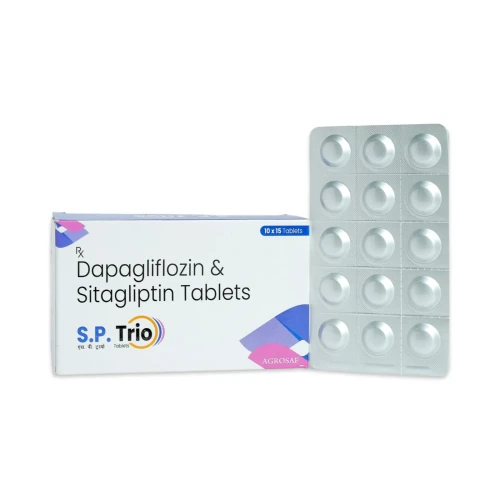
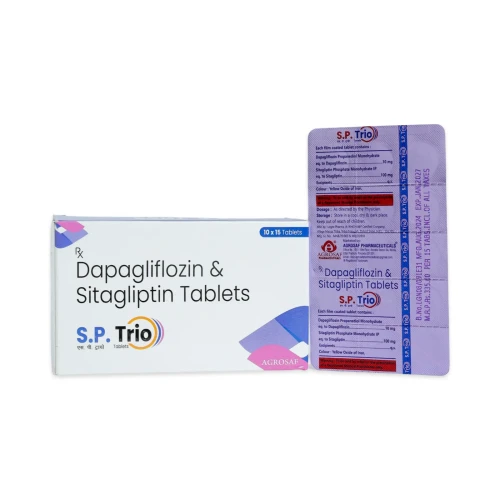
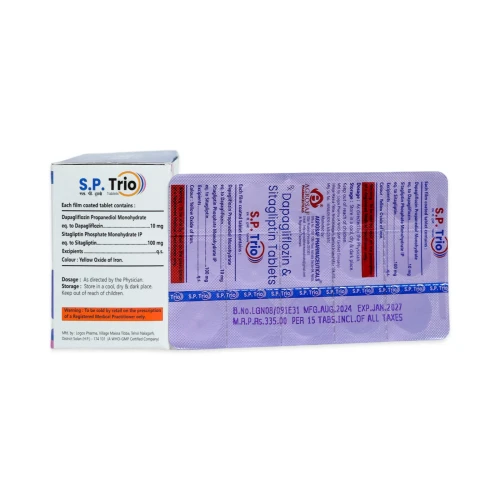

| PACKAGING TYPE: | 10x15 Alu-alu (10 Strips In 1 Box) |
| COMPOSITION: | Sitagliptin 100mg+dapagliflozin 10mg |
| FORMULATION: | Tablet |
| Description: | SP TRIO Tablet is an advanced anti-diabetic combination containing Sitagliptin and Dapagliflozin, designed for effective management of type 2 diabetes mellitus. Sitagliptin, a DPP-4 inhibitor, enhances insulin secretion and reduces glucagon levels, while Dapagliflozin, an SGLT2 inhibitor, works by promoting glucose excretion through urine. This dual mechanism helps achieve superior glycemic control, especially in patients not adequately controlled with single or dual therapy. |
| Side Effects: | Common side effects may include: Increased urination Urinary tract infections Thirst or dehydration Nasopharyngitis Headache Serious (rare) side effects: Ketoacidosis (due to Dapagliflozin) Pancreatitis (due to Sitagliptin) Severe urinary or genital infections Hypotension (due to fluid loss) |
| How to Use: | Take the tablet as prescribed by your doctor Usually taken once daily, with or without food Swallow whole with water Maintain proper hydration during treatment Follow recommended diet and exercise plan |
| Precaution: | Not recommended in severe kidney impairment Maintain adequate fluid intake to prevent dehydration Monitor kidney function regularly Use cautiously in elderly patients Inform doctor if you have history of recurrent UTIs or pancreatitis Avoid excessive alcohol consumption Not recommended during pregnancy or breastfeeding without medical advice |
| Product Benefits: | Dual-action formula for better blood sugar control Promotes glucose excretion via kidneys (SGLT2 action) Enhances insulin secretion and reduces glucagon levels Helps in weight management May support cardiovascular and renal health Low risk of hypogly |
Frequently Asked Questions
You May Like
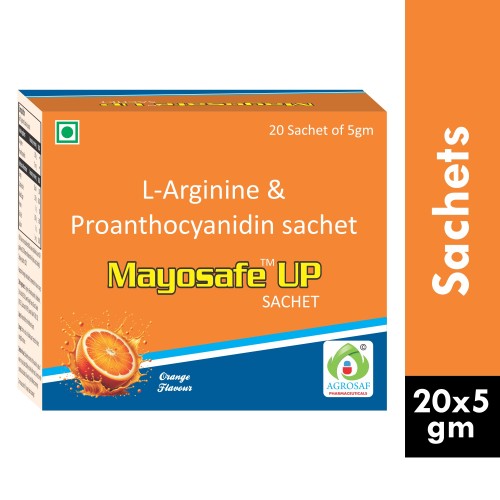
MAYOSAFE UP SACHETS
INGREDIENTS:-(ENERGY 21.00 KCAL,CARBOHYDRATE 1.80GM,ADDED SUGER 0.00GM,PROTEIN 3.00GM,TOTAL FAT 0.20GM,TRANS FAT 90.00MG)L-ARGNINE(3.00GM) & VACCINIUM OXYCOCCOS (PROANTHOCYANIDIN 75.00MG) GRANULES SACHET
₹ 1060/-
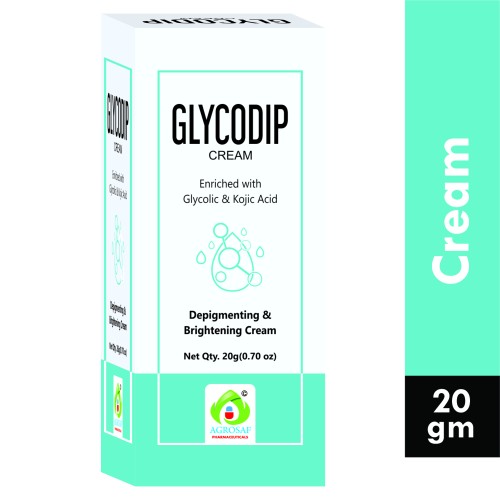
GLYCODIP CREAM
AQUA,Glycolic Acid,CETO STEARYL ALCOHOL,ALPHA ARBUTIN,PROPYLENE GLYCOL,NIACINAMIDE,PROPANEDIOL,DICAPRYLYL CARBONATE,EMULSIFYING WAX,KOJIC ACID DIPALMITATE,CETOMACROGOL 1000,ISOPROPYL MYRISTATE,GLYCERYL STEARATE(AND) PEG-100 STEARATE,GLYCERYL MONOSTEARATE,BETAINE,PHENOXYETHANOL & ETHYL HEXYL GLYCERINE, SODIUM LACTATE,SODIUM GLUCONATE,XYLITYLGLUCOSIDE(AND) ANHYDROXYLITOL (AND) XYLITOL,SODIUM HYDROXIDE,PERFUME,DISODIUM EDTA.
₹ 369.35/-
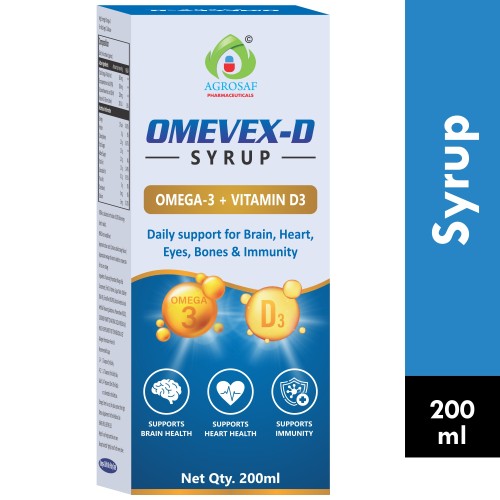
OMEVEX D SYRUP
Total Omega-3 Fatty Acid 610 mg, Eicosapentaenoic Acid (EPA) 260 mg, Docosahexaenoic acid (DHA) 200 mg, Vitamin D3 (From Lichen) 200 I.U
₹ 800/-
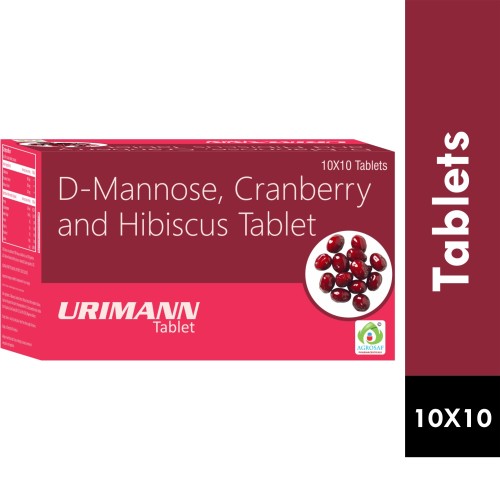
URIMANN TABLETS
Each film coated tablet contains Active Ingredients including D-Mannose 600 mg ( %RDA), Cranberry Extract 300 mg ( %RDA), and Hibiscus Extract 100 mg ( %RDA). Nutritional Information (Approx) per serving: Energy 2.4 kcal (0.12% %RDA), Carbohydrates 0.60 g (0.2% %RDA), Added Sugar 0 g (0% %RDA), Protein 0 g (0% %RDA), Total Fat 0 g (0% %RDA), Cholestrol 0 mg (0% %RDA), and Sodium 1 mg (0.05% %RDA)
₹ 4540/-
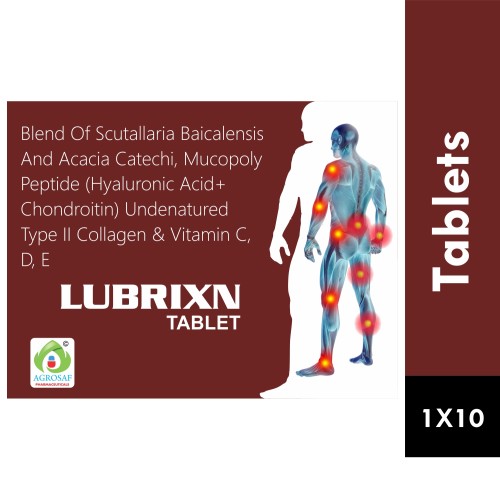
LUBRIXN TABLET
Each coated tablet contains (Approx): Blend of Scutallaria baicalensis and Acacia catechu 500 mg, Hyaluronic Acid 30 mg, Chondroitin 100 mg, Undenatured Type II Collagen 200 mg, Vitamin C 35 mg, Vitamin E 60 mg and Vitamin D3 400 I.U.
₹ 290/-
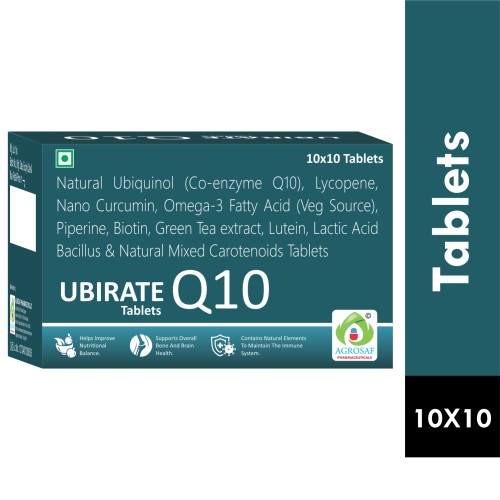
UBIRATE Q10 TABLETS
Each film coated tablet contains: Natural Ubiquinol (Co-enzyme Q10) 50mg, Lycopene 6% 5000mcg, Nano Curcumin 10% 500 mg, Omega 3 Fatty Acids Eicosapentaenoic Acid (EPA) 20% (veg source) 45 mg, Docosahexaenoic Acid (DHA) 10% (veg source) 30 mg, Piperine 5% 5 mg, Biotin 30 mcg, Wheat Germ Oil 25 mg, Lutein 8% 250 mcg, Green Tea Extract 10 mg, Natural Mixed Carotenoids 10 mg, Lactic Acid Bacillus 60 million spores, Vitamin A (Oily form as palmitate) 1600 IU, Vitamin B1 1 mg, Vitamin B2 1 mg, Vitamin B6 0.5 mg, Vitamin B12 0.5 mcg, Vitamin D3 100 IU, Calcium Pantothenate 1 mg, Folic acid 50 mcg, Ferrous Sulphate Eq. to Iron 5 mg, Magnesium Sulphate 1 mg, Zinc Sulphate monohydrate 0.5 mg, Potassium Sulphate 1 mg, Selenium di oxide 70 mcg, Chromium Picolinate 25 mcg, Elemental Boron (as Sodium Borate) 1.5 mcg, Elemental Silicon (as Colloidal Silicon Dioxide IP) 200 mcg, Elemental Nickel (as Nickel sulphate) 5 mcg, Elemental Tin (as stannous chloride dehydrate) 10 mcg, Elemental Vanadium (as Sodium metavanadate) 10 mcg, Colour: Red Oxide Of Iron
₹ 5690/-
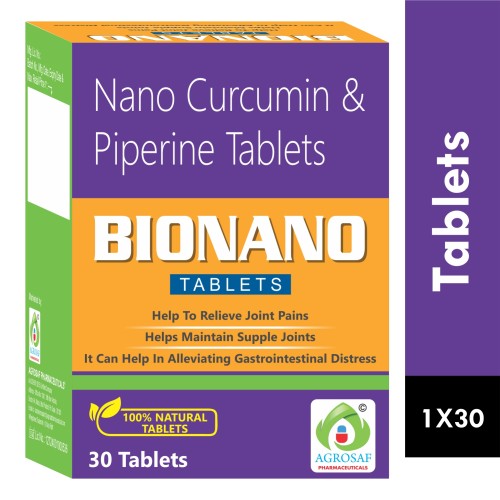
BIONANO TABLETS
Each Film Coated Tablet contains (approx.) Energy Value 0.40 Kcal, Carbohydrates 0.10 gm, Protein 0.00 gm and Fat 0.00 gm. Nano Curcumin 25% 500.00 mg and Piperine 5% 5.00 mg
₹ 1820/-
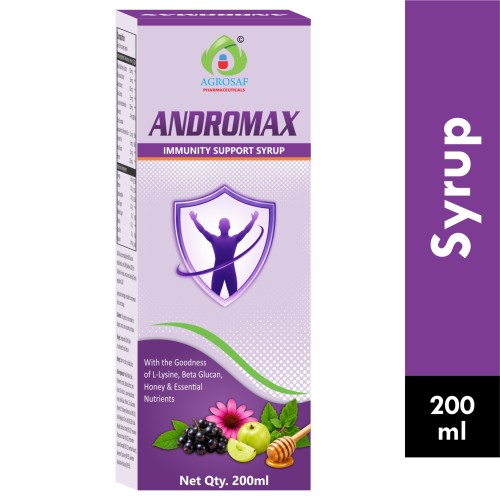
ANDROMAX SYRUP
Each 5 ml contains approx. Black Elderberry Extract 100 mg, Echinacea Extract 60 mg, Amla Extract 100 mg, Tulsi Extract 25 mg, L-Lysine Hydrochloride 250 mg, Vitamin C 40 mg, Zinc Gluconate equivalent to Elemental Zinc 2.5 mg, Vitamin D3 5 mcg, Beta Glucan 25 mg and Honey 250 mg. Nutritional Information: Energy 5 kcal, Protein 0.1 g, Carbohydrate 1.8 g, Total Sugar 0.2 g, Added Sugar 0 g, Total Fat 0 g, Sodium 8 mg and Cholesterol 0 mg
₹ 240/-
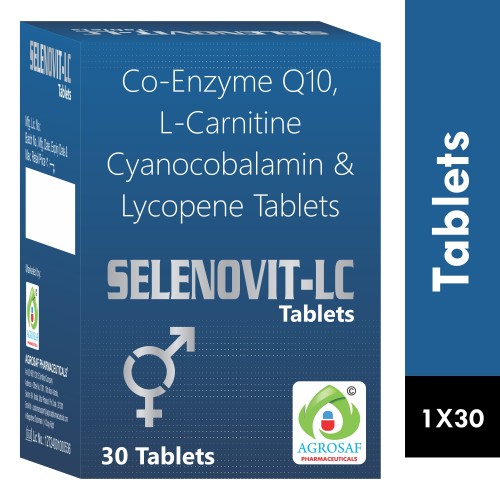
SELENOVIT-LC TABLETS
Nutritional Information: Approx. values per serving/tablet — Energy Value 0.40 Kcal, Carbohydrates 0.10 gm, Fat 0.000 gm and Protein 0.000 gm. Each film coated tablet contains (Approx.) Co-Enzyme Q10 (50%) 100 mg, L-Carnitine 500 mg, Cyanocobalamin 2.2 mcg, Lycopene 10% 5000 mcg and Excipients Q.S.
₹ 2180/-
MAYOSAFE UP SACHETS
INGREDIENTS:-(ENERGY 21.00 KCAL,CARBOHYDRATE 1.80GM,ADDED SUGER 0.00GM,PROTEIN 3.00GM,TOTAL FAT 0.20GM,TRANS FAT 90.00MG)L-ARGNINE(3.00GM) & VACCINIUM OXYCOCCOS (PROANTHOCYANIDIN 75.00MG) GRANULES SACHET
₹ 1060/-
GLYCODIP CREAM
AQUA,Glycolic Acid,CETO STEARYL ALCOHOL,ALPHA ARBUTIN,PROPYLENE GLYCOL,NIACINAMIDE,PROPANEDIOL,DICAPRYLYL CARBONATE,EMULSIFYING WAX,KOJIC ACID DIPALMITATE,CETOMACROGOL 1000,ISOPROPYL MYRISTATE,GLYCERYL STEARATE(AND) PEG-100 STEARATE,GLYCERYL MONOSTEARATE,BETAINE,PHENOXYETHANOL & ETHYL HEXYL GLYCERINE, SODIUM LACTATE,SODIUM GLUCONATE,XYLITYLGLUCOSIDE(AND) ANHYDROXYLITOL (AND) XYLITOL,SODIUM HYDROXIDE,PERFUME,DISODIUM EDTA.
₹ 369.35/-
OMEVEX D SYRUP
Total Omega-3 Fatty Acid 610 mg, Eicosapentaenoic Acid (EPA) 260 mg, Docosahexaenoic acid (DHA) 200 mg, Vitamin D3 (From Lichen) 200 I.U
₹ 800/-
URIMANN TABLETS
Each film coated tablet contains Active Ingredients including D-Mannose 600 mg ( %RDA), Cranberry Extract 300 mg ( %RDA), and Hibiscus Extract 100 mg ( %RDA). Nutritional Information (Approx) per serving: Energy 2.4 kcal (0.12% %RDA), Carbohydrates 0.60 g (0.2% %RDA), Added Sugar 0 g (0% %RDA), Protein 0 g (0% %RDA), Total Fat 0 g (0% %RDA), Cholestrol 0 mg (0% %RDA), and Sodium 1 mg (0.05% %RDA)
₹ 4540/-
LUBRIXN TABLET
Each coated tablet contains (Approx): Blend of Scutallaria baicalensis and Acacia catechu 500 mg, Hyaluronic Acid 30 mg, Chondroitin 100 mg, Undenatured Type II Collagen 200 mg, Vitamin C 35 mg, Vitamin E 60 mg and Vitamin D3 400 I.U.
₹ 290/-
UBIRATE Q10 TABLETS
Each film coated tablet contains: Natural Ubiquinol (Co-enzyme Q10) 50mg, Lycopene 6% 5000mcg, Nano Curcumin 10% 500 mg, Omega 3 Fatty Acids Eicosapentaenoic Acid (EPA) 20% (veg source) 45 mg, Docosahexaenoic Acid (DHA) 10% (veg source) 30 mg, Piperine 5% 5 mg, Biotin 30 mcg, Wheat Germ Oil 25 mg, Lutein 8% 250 mcg, Green Tea Extract 10 mg, Natural Mixed Carotenoids 10 mg, Lactic Acid Bacillus 60 million spores, Vitamin A (Oily form as palmitate) 1600 IU, Vitamin B1 1 mg, Vitamin B2 1 mg, Vitamin B6 0.5 mg, Vitamin B12 0.5 mcg, Vitamin D3 100 IU, Calcium Pantothenate 1 mg, Folic acid 50 mcg, Ferrous Sulphate Eq. to Iron 5 mg, Magnesium Sulphate 1 mg, Zinc Sulphate monohydrate 0.5 mg, Potassium Sulphate 1 mg, Selenium di oxide 70 mcg, Chromium Picolinate 25 mcg, Elemental Boron (as Sodium Borate) 1.5 mcg, Elemental Silicon (as Colloidal Silicon Dioxide IP) 200 mcg, Elemental Nickel (as Nickel sulphate) 5 mcg, Elemental Tin (as stannous chloride dehydrate) 10 mcg, Elemental Vanadium (as Sodium metavanadate) 10 mcg, Colour: Red Oxide Of Iron
₹ 5690/-
BIONANO TABLETS
Each Film Coated Tablet contains (approx.) Energy Value 0.40 Kcal, Carbohydrates 0.10 gm, Protein 0.00 gm and Fat 0.00 gm. Nano Curcumin 25% 500.00 mg and Piperine 5% 5.00 mg
₹ 1820/-
ANDROMAX SYRUP
Each 5 ml contains approx. Black Elderberry Extract 100 mg, Echinacea Extract 60 mg, Amla Extract 100 mg, Tulsi Extract 25 mg, L-Lysine Hydrochloride 250 mg, Vitamin C 40 mg, Zinc Gluconate equivalent to Elemental Zinc 2.5 mg, Vitamin D3 5 mcg, Beta Glucan 25 mg and Honey 250 mg. Nutritional Information: Energy 5 kcal, Protein 0.1 g, Carbohydrate 1.8 g, Total Sugar 0.2 g, Added Sugar 0 g, Total Fat 0 g, Sodium 8 mg and Cholesterol 0 mg
₹ 240/-
SELENOVIT-LC TABLETS
Nutritional Information: Approx. values per serving/tablet — Energy Value 0.40 Kcal, Carbohydrates 0.10 gm, Fat 0.000 gm and Protein 0.000 gm. Each film coated tablet contains (Approx.) Co-Enzyme Q10 (50%) 100 mg, L-Carnitine 500 mg, Cyanocobalamin 2.2 mcg, Lycopene 10% 5000 mcg and Excipients Q.S.